If you're running a service-based business, deciding between manual tools like Google Calendar and email or a dedicated booking system depends on how complex your operations are. Here’s the short answer:
- Manual tools (Google Calendar, email) work fine when you’re small, handling fewer than 15 bookings per week, or running a simple, one-person operation. They’re free, familiar, and flexible but can lead to double bookings, missed messages, and time-consuming manual work as you grow.
- Booking systems automate scheduling, payments, and communication. They prevent overbooking, save time, and provide insights to help you grow. However, they come with monthly fees ($20-$200+) and require some setup. These are better for businesses handling 20+ bookings a week, managing teams, or dealing with seasonal spikes.
Key takeaway: If you’re struggling with double bookings, juggling emails, or spending too much time on admin tasks, it’s probably time to upgrade to a booking system. If your needs are simple, manual tools might still work - for now.
Top 3 Calendar Booking Apps Calendly, TidyCal, + More
Manual Tools vs. Booking Systems: What's the Difference?
When it comes to managing reservations, the choice between manual tools and booking systems boils down to how much control and automation your business needs. Let’s break down the key differences.
What Are Manual Tools?
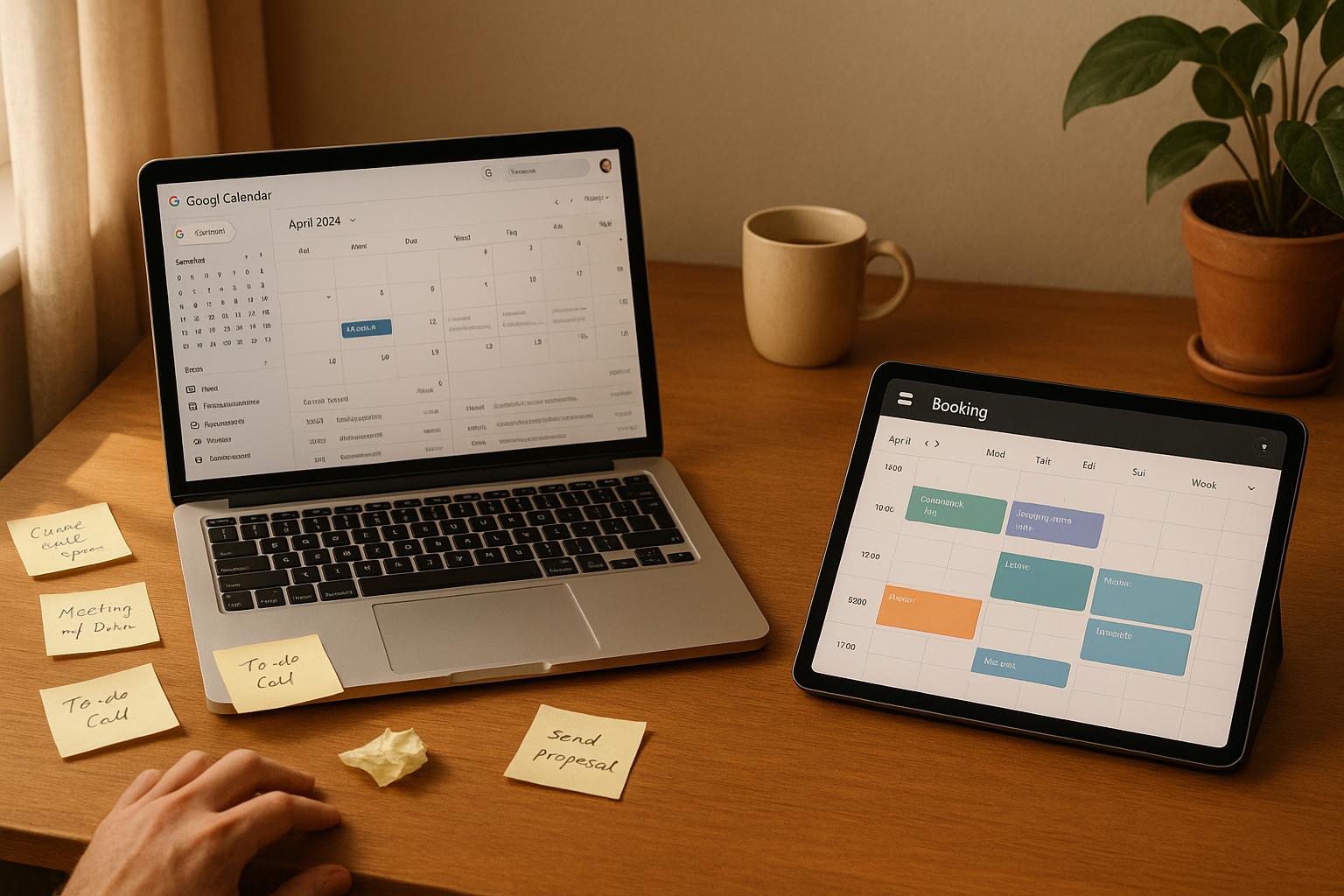
Manual tools are the go-to options for many small business owners. Think of tools like Google Calendar for scheduling, email for customer communication, text messaging for quick updates, and spreadsheets for tracking payments and customer details. They’re simple, familiar, and often free, which makes them appealing for businesses just starting out.
Where Manual Tools Fall Short
While manual tools can get the job done early on, they tend to show their limitations as your business grows. Here are some common challenges:
- Double Bookings: Without real-time updates, it’s easy to accidentally double-book time slots across different channels.
- Time-Consuming Processes: Tasks like checking availability, confirming appointments, and processing payments can eat into your day.
- Fragmented Communication: Managing customer interactions across multiple platforms can lead to missed messages or inconsistencies.
- Limited Insights: Tracking booking trends or financial performance manually can be tedious and prone to errors.
These hurdles can make managing a growing business increasingly difficult, often signaling the need for a more automated approach.
How Booking Systems Work Differently
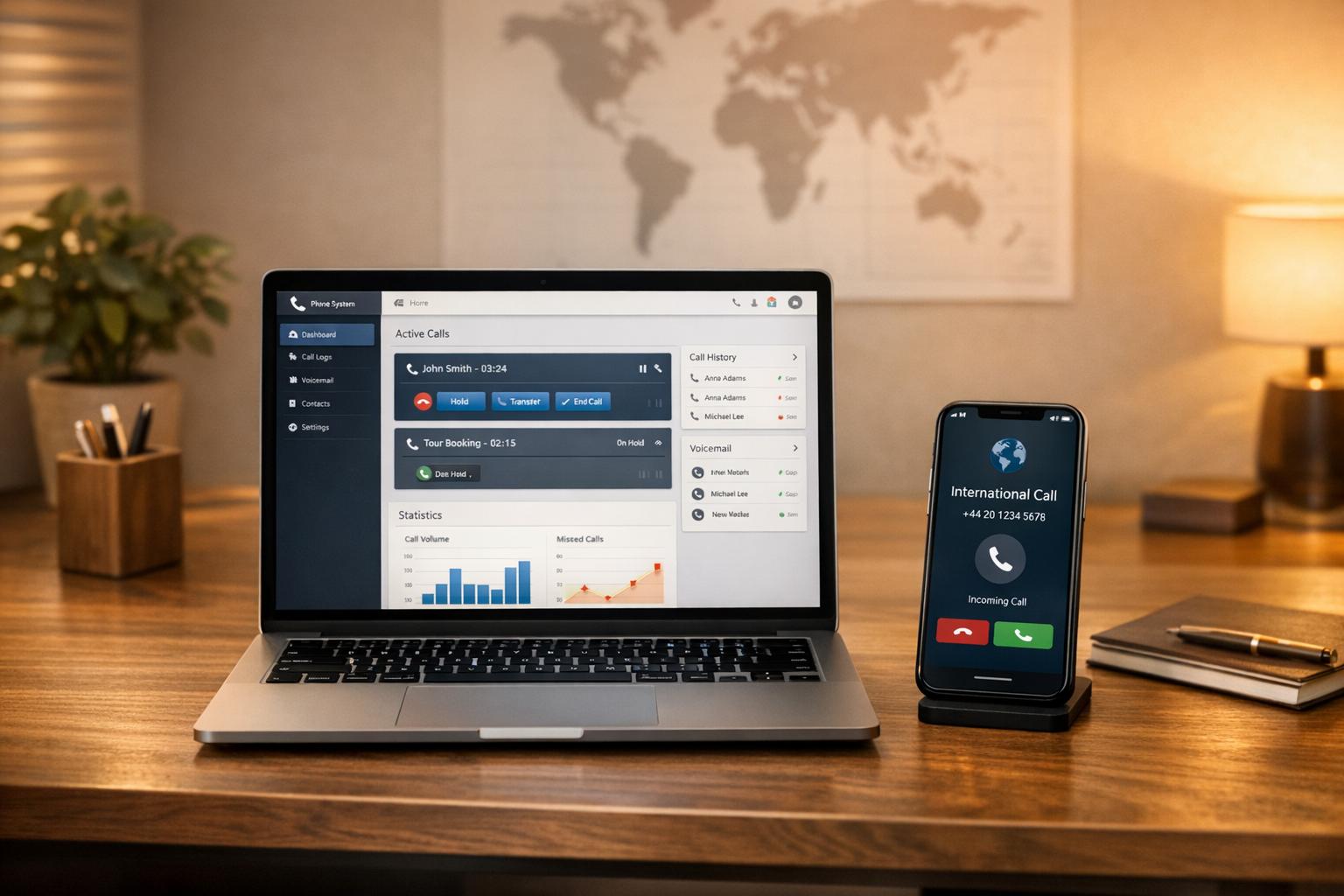
Dedicated booking systems take the hassle out of reservations by automating repetitive tasks. Here’s how they stand out:
- Real-Time Availability: Customers can instantly see open time slots, book their preferred option, and even make payments - all in one seamless process.
- Automated Updates: Once a booking is made, the system updates your calendar, blocks off the reserved time, and sends confirmation emails or reminders automatically.
- Integrated Payment Processing: Transactions are handled securely and instantly, eliminating the need for manual invoicing.
- Centralized Communication: All customer interactions are streamlined in one place, reducing the risk of missed messages.
- Actionable Insights: Built-in reporting tools provide data on popular time slots, seasonal trends, and customer preferences, helping you fine-tune pricing, marketing, and scheduling strategies.
While booking systems may require a subscription fee and some initial setup, the time savings, improved efficiency, and enhanced customer experience can make them a worthwhile investment - especially as your reservation volume grows.
Main Features of Booking Systems
Booking systems are designed to overcome the inefficiencies and limitations of manual tools. Here's what they bring to the table.
Real-Time Availability and Capacity Management
One standout feature of booking systems is their ability to prevent overbooking automatically. For example, if a customer reserves a 2:00 PM slot on your website, that time is instantly removed from all other booking channels. This ensures no double bookings occur.
These systems also stop accepting reservations once capacity is reached, keeping everything in sync. Whether customers book through your website, social media, or other platforms, the system updates availability in real time. Plus, you can set recurring schedules once, and the system will auto-generate future slots - no more manually updating calendars every week.
Automated Customer Communication
Gone are the days of endless back-and-forth emails. With booking systems, customers receive instant confirmation emails after making a reservation. These emails include all the essential details - date, time, location, what to bring, and cancellation policies.
The system also sends automated reminders, typically 24-48 hours before the appointment. This helps reduce no-shows significantly. Some businesses even use follow-up emails to request reviews or promote future services, all handled without any extra effort.
What’s more, the communication is always consistent and professional. Instead of repeatedly typing out the same information, customers receive polished, branded messages every time. And this isn't just about communication - booking systems also simplify payment handling.
Built-In Payment Processing
Handling payments becomes a breeze with this feature. Customers can pay directly on the booking page, eliminating the need for separate invoices or on-site payments. Once payment is completed, the system updates your calendar and logs all reservation details automatically.
This automation reduces administrative work by removing the hassle of manual invoicing and chasing payments. Customers who pay upfront are also more likely to show up, cutting down on no-shows and last-minute cancellations.
From a financial standpoint, businesses benefit from getting paid upfront, ensuring cash flow stability. This is especially helpful for service providers and tour operators who need to cover costs like equipment or venue rentals.
These systems support various payment methods, including credit cards, debit cards, and digital wallets like Apple Pay and Google Pay, appealing to a broader audience. Security is handled through PCI-compliant payment processors, so you don’t have to worry about meeting Payment Card Industry standards. All sensitive data is encrypted, ensuring secure transactions.
Reporting and Analytics
Unlike basic tools like Google Calendar, which only show your schedule, booking systems provide in-depth analytics to help you make better business decisions.
You can identify trends, such as which time slots are most popular, seasonal booking patterns, and average transaction values. For instance, if summer tours always sell out but winter bookings lag, you might shift focus to indoor options during colder months.
Revenue tracking helps pinpoint your top-performing services. If your premium 3-hour tour consistently sells out while the basic 1-hour tour struggles, it might be time to add more premium slots or adjust pricing. These insights make it easier to optimize your offerings and maximize profitability.
Comparison Table: Manual Tools vs. Booking Systems
| Feature | Manual Tools (Google Calendar + Email) | Booking Systems |
|---|---|---|
| Setup Cost | Free | $20-200+ per month |
| Time Investment | High (ongoing manual work) | Low (after initial setup) |
| Booking Process | Multiple steps, prone to errors | One-click booking with instant confirmation |
| Payment Collection | Manual invoicing, delayed payments | Automatic payment processing, immediate collection |
| Customer Communication | Manual emails, inconsistent messaging | Automated confirmations, reminders, and follow-ups |
| Overbooking Risk | High (no real-time sync) | Eliminated (real-time availability updates) |
| Business Insights | Limited (manual tracking required) | Comprehensive analytics and reporting |
| Scalability | Becomes unmanageable with growth | Handles increased volume automatically |
| Professional Appearance | Basic, fragmented experience | Polished, branded customer journey |
sbb-itb-3dd36ef
When to Use Each Option
Choosing between a manual booking approach or a dedicated system depends on your business size, booking frequency, and growth aspirations. Let’s break down when each option makes sense.
When You Need a Booking System
If your business is growing or operates at a high capacity, a booking system can save you time and headaches. Here are some clear signs it’s time to make the switch:
- High booking volume: Managing over 20-30 bookings a week manually? That’s a recipe for burnout. A booking system takes over the repetitive tasks, freeing up your time to focus on running your business.
- Team scheduling: If you have multiple staff members - such as guides, instructors, or other team members - keeping everything organized manually becomes nearly impossible. A single double-booking can create chaos, especially with a team of six or more.
- Seasonal spikes: For businesses with busy seasons, like summer or holidays, booking systems are essential. Jumping from a manageable 10 bookings a week to over 100 during peak periods can overwhelm manual tools.
- Premium services: If you’re charging $150 or more per person for experiences, customers expect a seamless booking process. A back-and-forth email chain for a $300 wine tour could appear unprofessional and even lead to lost sales.
- Future growth: Even if you’re small now, investing in a booking system early can save you from scrambling to transition later when your business expands.
That said, if your operations are simple and straightforward, manual tools may still work for now.
When Manual Tools Work Fine
For smaller or less complex businesses, manual tools like Google Calendar and email can still get the job done. Here’s when sticking with these tools makes sense:
- Solo operators: If you’re a one-person operation offering a single type of experience with a predictable schedule, manual tools are often sufficient.
- Low booking volume: Businesses handling fewer than 15 bookings per week can often manage without automation. The time commitment is minimal, and you save on software costs.
- Irregular schedules: If your business operates sporadically or offers highly customized experiences that require lots of back-and-forth communication, manual tools may provide the flexibility you need.
- Tight budgets: If $50 a month for a booking system feels like a stretch, starting with manual tools is perfectly fine. Just set a revenue goal for upgrading when the time is right.
Real Examples for US Businesses
To illustrate, let’s look at a few real-world scenarios:
A solo kayak guide in Austin, Texas, might stick with Google Calendar for weekend tours. With only 8-12 customers per week and simple 3-hour trips, responding to inquiries manually works well and even helps build personal connections with clients.
On the other hand, a multi-activity adventure company in Colorado, offering hiking, rafting, and climbing experiences, would struggle without automation. With 15 guides, over 200 weekly bookings during peak season, and the need to coordinate equipment across locations, manual tools wouldn’t cut it.
A cooking class studio in Portland, Oregon, might start manually. With 3-4 classes per week and 12 students per class, this setup is manageable initially. However, as they attract more customers, upgrading to a booking system within six months would be wise.
For food tour companies in cities like New York or San Francisco, a booking system is essential from day one. Tourists paying $75-$150 per person expect instant confirmations and polished communication.
Ultimately, the key is to evaluate your current needs while keeping an eye on your future plans. Most businesses eventually outgrow manual tools, so think of a booking system as an investment in smoother operations and long-term success.
How Directoury Helps You Choose
Picking the right booking system is a big deal when it comes to running your experience-based business smoothly. That’s where Directoury steps in, offering expert advice and carefully selected resources designed specifically for experience operators. Let’s break down how Directoury makes this process simpler.
Expert Help and Verified Resources
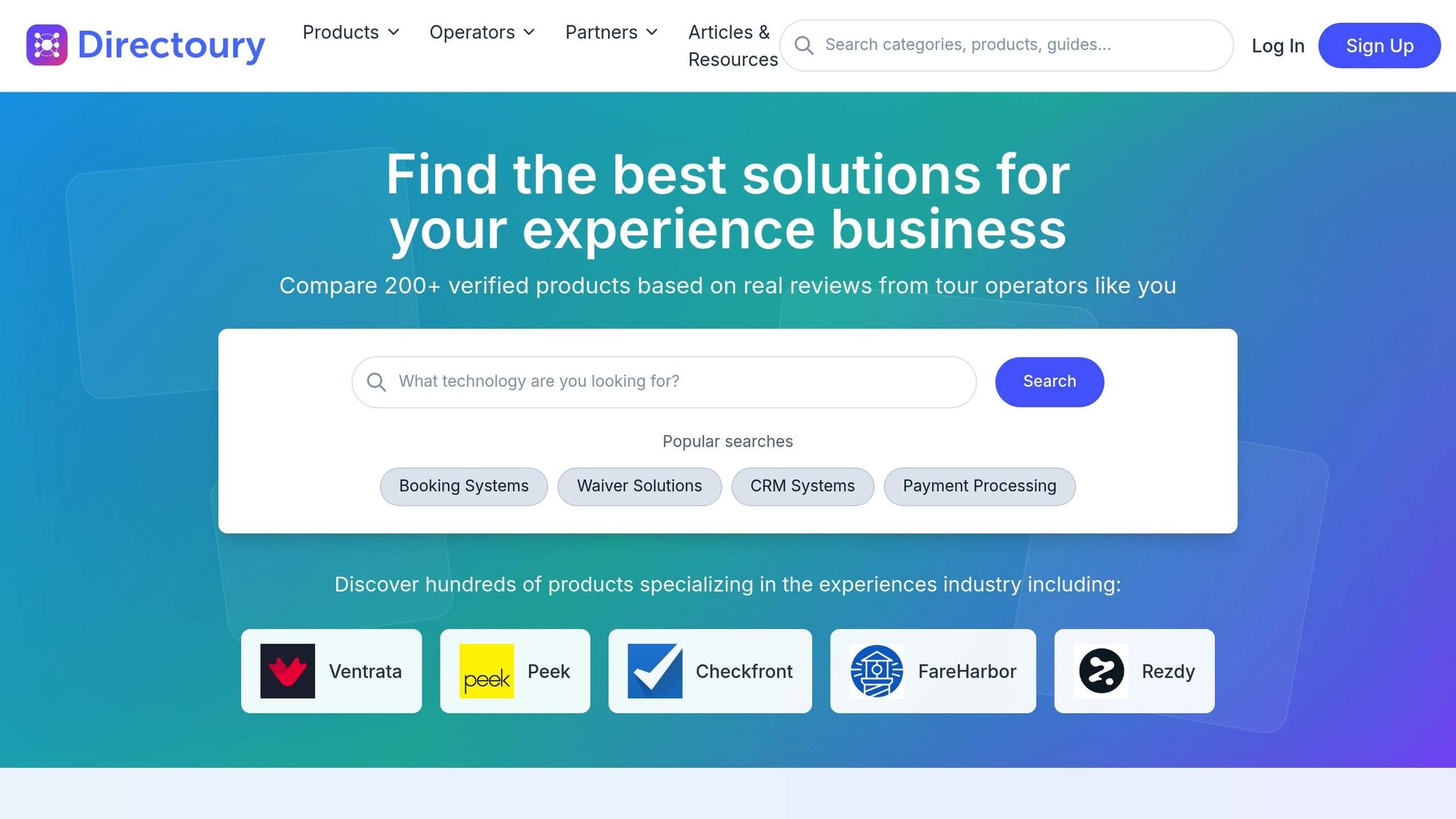
Directoury saves you the hassle of endless research by connecting experience operators - like tour companies and activity providers - with software vendors who truly understand the industry. Instead of wading through countless options, you’ll have access to a curated database of over 200 verified software vendors, all specializing in the experience economy.
The platform also provides buyer's guides and verified reviews from other operators who’ve faced similar challenges. Whether you’re managing a single-location escape room or a multi-city food tour business, you’ll gain valuable insights from businesses with similar needs and booking demands.
Tools to Make Choosing Easier
On top of these resources, Directoury uses an AI-powered recommendation system to help you find the right technology. It takes into account your specific needs - like booking volume, team size, and budget - to match you with tools that fit your business.
The platform covers a range of industry-specific solutions, including booking platforms, waiver systems, and channel management tools. It also highlights essential small business tools like HR software, payroll systems, insurance options, and marketing automation. This comprehensive approach ensures you can evaluate how different systems work together, making it easier to build a tech stack that fits your business perfectly.
Why Directoury Works for US Businesses
Founded by Alex Kremer and Jason Hackett, Directoury is designed with the US market in mind. It connects you with vendors who understand local market standards and the specific needs of US-based experience operators. Whether you’re managing seasonal booking spikes or running a premium wine tour, Directoury helps you find systems that complement your brand and handle the unique challenges of your business.
With Directoury, you don’t have to navigate these crucial technology decisions alone. The platform’s focus on efficiency and scalability means your business will have the tools it needs to grow and thrive.
Conclusion: Picking the Right Booking Method for Your Business
Choosing between manual tools like Google Calendar and email or a dedicated booking system depends entirely on your business's size, complexity, and future goals. If you're a small operation handling just a handful of bookings each week, manual tools might suffice for now. They’re simple and get the job done. But as your business grows - managing multiple time slots, handling payments, or juggling customer communication - a booking system becomes a necessity, not a luxury.
Waiting to switch can be a headache. Delaying the transition means dealing with more customer data, retraining your team, and potentially losing revenue during the process. Plus, today's customers expect instant confirmations and seamless service - something manual tools struggle to provide, especially during busy seasons.
Your tech choices should support your vision for growth. Whether you’re looking to expand locations, handle more bookings, or streamline operations, investing in the right booking system can give you a serious edge. These systems offer automation, detailed reporting, and a polished customer experience, all of which are crucial for scaling your business effectively.
Need help finding the right fit? Directoury’s curated database and AI-powered recommendations simplify the process. With verified reviews from other operators, you’ll have the insights to choose a tool that aligns with your needs, budget, and growth plans.
Ultimately, selecting the right booking method isn’t just about managing reservations - it’s about laying the groundwork for growth and delivering the professional experience your customers expect.
FAQs
How do I decide between using a simple tool like Google Calendar or investing in a dedicated booking system?
When deciding between a straightforward tool like Google Calendar and a specialized booking system, it’s important to consider what your business truly needs. If you’re juggling intricate reservations, managing group bookings, coordinating multi-day schedules, or require features like automated payments and ticketing, a dedicated booking system can be a game-changer. It not only saves time but also helps minimize mistakes.
While simple tools work well for basic scheduling, they often fall short when it comes to advanced features that make scaling and streamlining operations easier. A dedicated booking system is built to handle larger volumes, enhance the customer experience, and support your business as it grows.
How does a booking system help improve communication with customers and prevent no-shows compared to using email or Google Calendar?
A booking system improves how you stay in touch with customers by automating reminders through SMS, email, or push notifications. These reminders help keep customers aware of their upcoming appointments, cutting down on missed bookings.
On top of that, most booking systems let customers easily reschedule or cancel appointments, keeping your calendar tidy and reducing misunderstandings. This kind of automation and ease is tough to match with manual tools like email or Google Calendar, making a booking system a smart investment for service-focused businesses.
How do I choose and set up a booking system for my growing service-based business?
When setting up a booking system for your business, it’s important to think ahead. Start by choosing a system that can handle the growth of your business over time. A system that can manage a higher volume of bookings as you expand will save you from needing to switch later. Also, pay attention to the pricing - whether it’s a subscription fee, booking fees, or a combination of both. Make sure it fits your budget without cutting into your profits.
Next, decide if you need a full-fledged booking website or just a widget to integrate into your current site. Offering online booking options is a must these days - it makes things easier for your customers and helps streamline your operations. Look closely at features like calendar syncing, payment processing, and tools for managing customer details. These can make a big difference in how well the system works for your business and its goals.