
You can technically run a tour business without a business bank account, but it’s a bad idea. Mixing personal and business finances can lead to tax issues, legal risks, and operational confusion. It increases your chances of an IRS audit by 300%, makes bookkeeping harder, and can even put your personal assets at risk if your business faces liabilities. For LLCs, partnerships, and corporations, having a separate business account is legally required to maintain liability protection.
Here’s why separating your finances matters:
- Simplifies taxes: Clear records make deductions easier and reduce audit risks.
- Protects personal assets: Avoids "piercing the corporate veil" in legal disputes.
- Improves professionalism: Customers trust businesses with proper accounts.
- Helps track business health: Accurate cash flow data supports better decisions.
To get started, choose the right bank and account type, gather required documents (like your EIN and business license), and integrate your account with tools like QuickBooks or payment processors. This setup saves time, reduces errors, and keeps your business running smoothly.

Business Bank Account Benefits vs Risks of Mixing Personal and Business Finances
5 Best Business Bank Accounts for Small Business (2025)
Personal vs. Business Finances: What You Need to Know
Personal finances encompass your individual assets and liabilities - like your home, car, and retirement accounts. On the other hand, business finances include all income and expenses tied to running your tours, from ticket sales to operating costs.
Keeping these two financial worlds separate is more than just a good habit - it’s a way to shield your personal assets from business risks. Even for sole proprietors, who don’t automatically have legal protection, this separation can offer a layer of security.
Beyond protection, maintaining clear boundaries between personal and business finances helps build business credit and simplifies accounting. It also makes tax preparation less stressful and reduces the chances of triggering IRS scrutiny.
What Qualifies as Business Money?
For tour operators, business money includes any revenue your tours generate - ticket sales, private bookings, customer tips, and even upfront deposits or refunds. On the expense side, it covers operating costs such as equipment (think kayaks or hiking gear), marketing, staff wages, insurance, transportation, office supplies, permits, licenses, training programs, customer experience upgrades, and bank fees.
Treating every dollar that flows through your tour operation as business money ensures clear financial boundaries and accurate records. For example, a $500 deposit for a group kayak tour is business income, while $75 spent on new life jackets is a business expense.
Legal Requirements by Business Structure
Your business structure determines whether separating finances is optional or mandatory. Sole proprietors aren’t legally required to maintain separate bank accounts because the owner and the business are considered one entity. However, mixing funds can leave personal assets exposed to business liabilities.
For LLCs, keeping business finances separate is essential to maintain the liability protection the structure offers. Partnerships and corporations face even stricter rules - they must have separate business accounts, an Employer Identification Number (EIN), and their deposits are insured up to $250,000, distinct from personal accounts.
Opening a dedicated business bank account isn’t just about compliance; it’s about safeguarding your personal assets.
"generally no one can come after the owner's personal assets" – Eric Calaman, Business Executive, Bank of America
Using an EIN instead of your Social Security Number further separates your business identity and helps build its credit profile. The IRS recommends having a separate business checking account to simplify recordkeeping and streamline tax preparation - this step is often critical depending on your business structure.
IRS and Tax Requirements
The IRS expects businesses to maintain clear financial records for income reporting and expense deductions. When personal and business funds are mixed, it creates a murky trail that could trigger an audit. This risk increases if you claim excessive or unrealistic deductions, which might lead the IRS to question whether your operation is a legitimate business or just a hobby.
Clean, organized records make tax preparation much easier. When all business transactions flow through dedicated accounts, you have the documentation needed to satisfy IRS requirements. For sole proprietors, while a separate account isn’t mandatory, not having one can complicate recordkeeping and heighten audit risks. For LLCs, partnerships, and corporations, separating finances isn’t just smart - it’s legally required.
With these tax advantages and legal protections in mind, it’s worth taking a closer look at the risks of mixing personal and business finances.
Risks of Mixing Personal and Business Finances
Using your personal bank account for business transactions can lead to serious financial, legal, and operational issues that may jeopardize your business's success.
Accounting and Tax Problems
Blurring the lines between personal and business finances makes it hard to identify which transactions qualify as deductible. This could trigger IRS audits or penalties if improper claims are made. On the flip side, you might miss out on legitimate deductions because you can’t clearly separate eligible expenses. For tour operators, this becomes especially problematic. Expenses like equipment purchases, permit fees, and marketing costs can get lost in the mix, making accurate tracking nearly impossible. This confusion not only complicates tax preparation but could also end up costing you money.
Legal and Liability Risks
Commingling personal and business funds can strip away the legal protections that separate your personal assets from your business liabilities. Courts may decide to "pierce the corporate veil", which allows creditors to go after your personal assets to cover business debts.
"Commingling is one of those activities that really damages a business. The protections of the corporate veil exist to separate the personal money and assets of a business' owners from the liabilities of the business itself. The act of commingling allows a creditor to come in and say 'there is no difference between Mr. Johnson and Mr. Johnson's company as money is moved freely between the business accounts and those of Mr. Johnson. Therefore, we ask the court to pierce the corporate veil of the company as the company is not in actuality a separate entity from Mr. Johnson.' This will allow a creditor to pursue the personal money and assets of the business owner to satisfy the liabilities of the company." – Dan Watkins, Founding Partner, Watkins Firm
Using business funds for personal expenses can also lead to fraud allegations or claims of breaching fiduciary duties, leaving you vulnerable to lawsuits. These risks highlight the importance of maintaining a dedicated business account.
Cash Flow and Operations Problems
Mixing finances doesn't just create legal troubles - it also skews your understanding of your business's financial health. Without clear records, you may not know whether your available funds are actual revenue or personal contributions. This lack of clarity can make it harder to assess profitability, plan for growth, or make decisions about hiring and equipment purchases. Even routine tasks, like issuing customer refunds, can become unnecessarily complicated.
Impact on Professionalism and Customer Trust
When your invoices or payment requests show your personal name instead of your business name, it can undermine your credibility. Customers may hesitate to send deposits to a personal account, fearing fraud or questioning the security of their funds. Beyond customers, lenders, vendors, and potential partners often view mixed finances as a warning sign, casting doubt on your company’s stability and professionalism.
Benefits of Opening a Business Bank Account
Setting up a business bank account from the start can revolutionize how you handle your tour operation's finances. It’s not just about staying organized - it directly impacts your daily workflows and lays a solid foundation for future growth.
Easier Bookkeeping and Tax Preparation
Having a dedicated business bank account simplifies managing your books and preparing taxes. By keeping all business transactions in one place, you create a clear, traceable financial record. Pairing your account with accounting software like QuickBooks or FreshBooks can further streamline the process, automating transaction categorization and reducing the need for tedious manual entries.
"A business bank account will vastly simplify your tax preparation. When all your business transactions happen in one account, you have a clear record of every dollar your company earned and spent during the year. This single change can save hours of work and reduce the risk of costly mistakes." – Brex
This approach not only saves time but also reduces the likelihood of errors during tax season. Plus, it helps ensure compliance with legal and regulatory requirements, giving you peace of mind.
Better Legal and Compliance Support
For businesses structured as LLCs or corporations, having a separate bank account isn’t just a good idea - it’s a legal necessity. It protects your personal assets by maintaining a clear distinction between personal and business finances. Without this separation, courts could "pierce the corporate veil", putting your personal wealth at risk to cover business liabilities.
Additionally, most banks require businesses to have a dedicated account when applying for loans. This step enhances your credibility with lenders and shows that your operation is financially organized and serious about growth.
Clearer Business Insights and Planning
Separating business and personal finances does more than protect your assets - it provides a crystal-clear picture of your company’s financial health. With a dedicated account, you can easily track revenue and expenses, making it simpler to evaluate cash flow and plan strategically. Whether you’re considering hiring new staff, upgrading equipment, or expanding your services, having accurate financial data is crucial. Without this clarity, you risk making decisions based on incomplete or misleading information.
Access to Business Banking Tools
Business bank accounts often come with specialized features that simplify operations. For instance, many accounts allow you to accept credit card payments directly, eliminating the need for a third-party service. Business credit cards can help manage cash flow while building credit for future financing needs. Other tools, like merchant services, payroll integration, and booking management, reduce administrative work and free up your time.
Some community credit unions even offer business accounts with lower fees and more flexible cash deposit options.
"Brex has the best business banking account, and the built-in invoicing saves us hours. We can move so much faster with one seamless solution for banking, invoicing, expenses, and AP from Brex." – Mel Nasiri, Billing Account Specialist, Rechat
Opening a business account before you start accepting bookings ensures every transaction is properly recorded from day one. Even if you don’t need a business credit card right away, setting one up early helps establish a strong credit history for your company.
sbb-itb-3dd36ef
How to Set Up a Business Bank Account for Tour Operators
If you're ready to open a business bank account, here's how to get started.
Choose Your Business Structure
Your business structure plays a big role in determining the type of documentation you'll need - and whether having a separate account is mandatory. For instance, sole proprietors can technically use their Social Security Number (SSN) to set up an account, but getting an Employer Identification Number (EIN) makes the process smoother. Plus, using a personal bank account for business can lead to messy accounting, tax complications, and even liability risks, so it’s best to avoid that route.
If your business is an LLC, partnership, or corporation, a separate business bank account is required by law. These structures must also have an EIN for federal tax purposes.
Gather the Necessary Documents
Once you've decided on your business structure, it’s time to collect the required paperwork. Here’s what you’ll need:
- Personal Identification: A government-issued ID, like a driver’s license or passport, for all account owners and authorized signers.
- Business Identification: Your EIN, or your SSN if you're a sole proprietor without an EIN.
The specific documents depend on your business structure:
- Sole Proprietorship: A business license or a document like a Fictitious Name Certificate or Certificate of Trade Name that lists both your name and the business name.
- LLC: Articles of Organization or a Certificate of Formation, along with an Operating Agreement. Some banks may also require a Corporate Resolution if officer names aren’t listed in the formation documents.
- Partnership: A Partnership Agreement and a business name filing document.
You’ll also need a physical U.S. business address. While some banks might accept a registered agent address, it’s best to confirm this in advance. Lastly, be ready to meet the bank's minimum deposit requirement, which can range from $30 to over $1,000. To avoid surprises, call the bank ahead of time to confirm their specific criteria.
Pick the Right Account for Your Business
Not all business bank accounts are the same, and as a tour operator, you’ll want an account that can handle seasonal cash flow changes and customer payment fluctuations. Here are a few options to consider:
- Business Checking Account: Ideal for managing daily operations.
- Business Savings Account: Useful for setting aside funds for taxes or major expenses.
- Merchant Services Account: Allows you to accept credit and debit card payments.
The type of financial institution you choose also matters:
- Credit Unions: Known for lower fees and minimum deposit requirements. They’re often a good option for small businesses, especially if you handle a lot of cash.
- National Banks: Offer a wide range of services and an extensive branch network, though they may charge higher fees.
- Regional or Community Banks: Provide more personalized service and competitive rates tailored to local businesses.
- Online/Fintech Banks: Great for remote account setup and integration with modern payment tools, but they might not suit all business models.
When evaluating accounts, pay attention to features like:
- Monthly service fees and transaction-related charges, such as cash handling or wire transfer fees. Look for options to waive fees by maintaining a minimum balance or meeting transaction thresholds.
- Compatibility with accounting tools like QuickBooks and payment processors.
- Digital features, including online banking, mobile apps, invoicing, and cash flow management tools.
- Access to branches, ATMs, and customer support. Some businesses may also benefit from in-person consultations with a banker.
Once you’ve chosen the right account, you can integrate it with your other business tools to streamline your financial operations.
Connecting Your Banking Setup to Your Technology Stack
Integrating Banking with Booking and Payment Tools
Having a dedicated business bank account does more than just separate your personal and business finances - it also serves as the backbone of your technology ecosystem. By linking your account to accounting platforms like QuickBooks, Xero, or FreshBooks, you can automate tasks like importing transactions, categorizing expenses, and tracking revenue. This eliminates the need for manual data entry and keeps your financial records organized.
The integration doesn't stop there. Your payment processors and booking systems can also connect seamlessly with your business bank account. For example, when customers book tours on your website and pay via credit cards, those payments flow directly from processors like Stripe or PayPal into your account. Meanwhile, your accounting software logs these transactions automatically, making reconciliation a breeze and saving you valuable time to focus on running your business.
"Modern business accounts seamlessly integrate with accounting software like QuickBooks, Xero, and FreshBooks. These integrations automatically categorize expenses, track revenue, and generate financial reports - tasks that would take hours to complete manually. When bank feeds flow directly into your accounting software, you spend less time on data entry and more time growing your business." – Brex
This interconnected setup creates an automated workflow that minimizes errors, simplifies tax preparation, and provides real-time insights into your cash flow. Your booking system handles reservations, your payment processor manages transactions, your bank account receives the funds, and your accounting software ties it all together. The result? A comprehensive financial system that runs smoothly without constant manual updates. To fully unlock these benefits, choosing the right software tools is key.
Using Directoury for Technology Recommendations
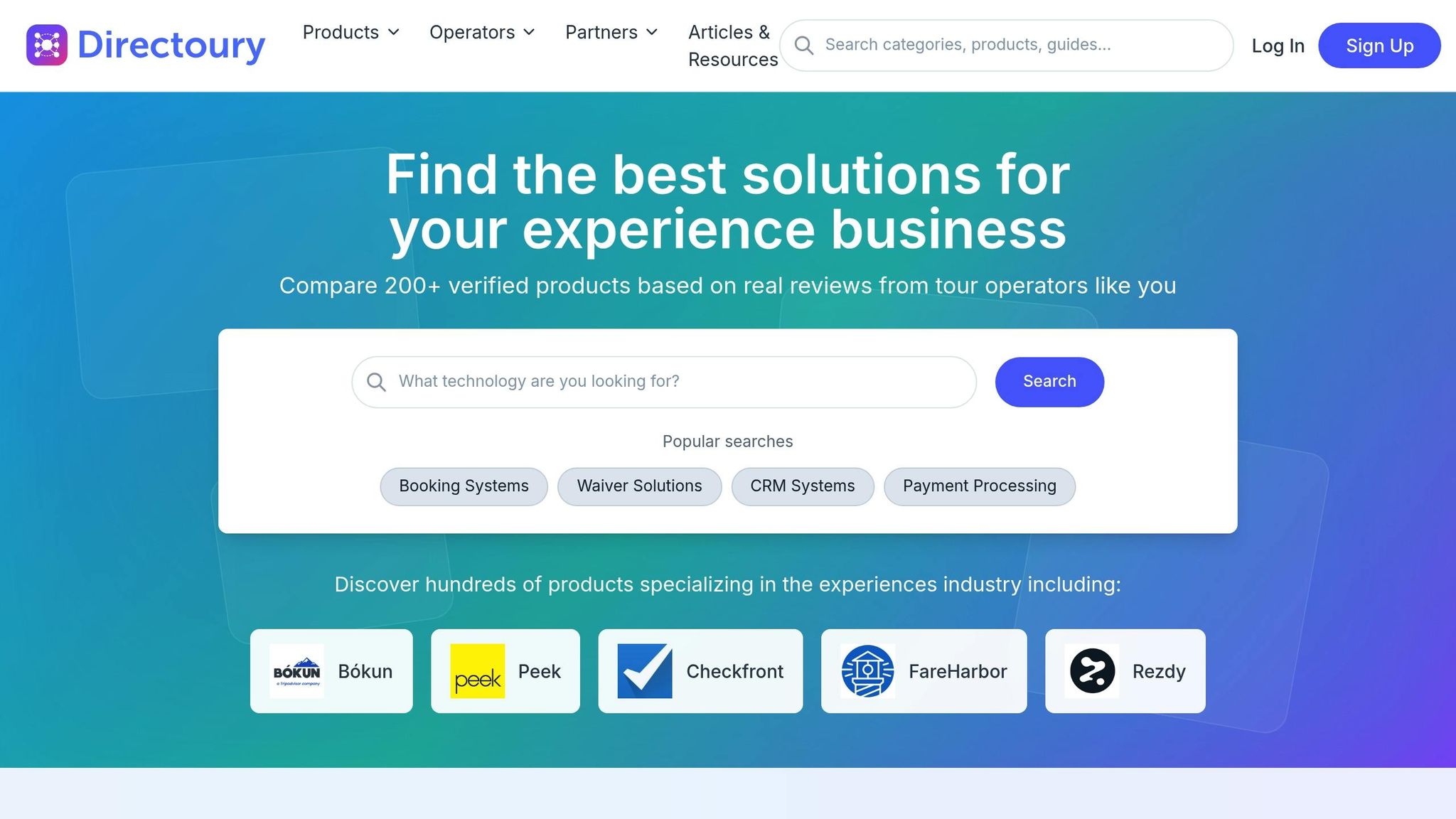
Finding the right tools to build this integrated system can feel overwhelming, especially if you're just starting out. That’s where Directoury steps in. Designed to simplify the decision-making process, Directoury connects tour operators with software vendors that specialize in the needs of experience-based businesses.
Using AI-driven recommendations, Directoury matches your specific requirements with a database of over 200 verified software vendors. Whether you’re looking for booking platforms, payment processors, or accounting tools that sync effortlessly with your bank account, Directoury helps you find the right fit. You can also compare options and read reviews from other tour operators who’ve already tested these tools.
Instead of spending hours - or even weeks - researching which software integrates best with your banking setup or offers the most competitive transaction fees, Directoury provides tailored recommendations. This allows you to build a cohesive technology stack from the start, ensuring your business bank account works seamlessly with every tool you rely on to manage and grow your tours.
Conclusion: Start Strong with Separate Finances
Technically, you could run tours without a dedicated business bank account, but the risks far outweigh the convenience. Mixing personal and business funds can lead to legal headaches, tax complications, and operational confusion. It jeopardizes asset protection and makes it harder to get a clear picture of your cash flow.
Setting up a dedicated business bank account from the start lays the groundwork for smoother operations and future growth. It simplifies bookkeeping, protects your personal assets, helps establish business credit for financing opportunities, and gives your business a more professional edge. Plus, it eliminates potential accounting issues, compliance concerns, and missed tax deductions.
To get started, decide on your business structure, gather the necessary documents (like your FEIN, business license, and personal ID), and choose a bank that fits your needs. Once your account is open, link it to your booking platforms, payment processors, and accounting tools. This integration creates a seamless, automated workflow, saving you time and reducing errors.
Directoury can help you take this a step further. With AI-driven recommendations, it connects you to software solutions that sync perfectly with your new business account. Instead of spending weeks researching tools, you can ensure your financial systems work together effortlessly. Financial organization isn't just about staying compliant - it’s about building the kind of structure that lets you focus on what you do best: delivering unforgettable tours and growing your business.
FAQs
Why should I keep my personal and business finances separate?
Mixing your personal and business finances isn’t just messy - it’s risky. It complicates bookkeeping, increases the likelihood of an IRS audit, and could mean missing out on tax deductions or even facing penalties. Worse, blending these finances might put your liability protection at risk, leaving your personal assets vulnerable if your business encounters legal trouble.
A simple solution? Open a dedicated business bank account. This keeps your financial records organized, makes tax prep much easier, and shields your personal finances from potential business liabilities. Starting with separate accounts from day one lays the groundwork for running your business smoothly and responsibly.
Do I need a separate business bank account to run my tour business?
While it's not mandatory by law to open a separate business bank account, blending personal and business finances can create serious legal and financial challenges. For LLCs or corporations, mixing funds might undermine liability protections, leaving your personal assets vulnerable in cases of lawsuits or unpaid debts.
Keeping your finances separate also makes tax preparation easier, enhances financial tracking, and helps you appear more professional to clients and partners. Starting with a dedicated business account is a wise step to safeguard both your personal and business finances.
Do I need a separate business bank account for my tour business?
Using a business bank account for your tour business is a smart move that keeps your finances organized and manageable. By separating personal and business funds, you simplify bookkeeping and tax preparation while minimizing the chance of mistakes. Plus, it safeguards your personal assets from any liabilities tied to your business.
Beyond organization, a business bank account boosts your credibility with clients and vendors. It can also help you establish business credit and often includes helpful features like online banking and integration with accounting software. These tools give you greater control over your cash flow, ensuring your operations run efficiently right from the start.
Related Blog Posts
- Tour Operator Software Selection: Complete Checklist
- Stripe vs Square vs PayPal for Tour Companies
- As a new Tour Operator, do I need a website right away, or can I just use Facebook/Instagram to get bookings?
- As a new Tour Operator, do I need special insurance software or can I just call an insurance agent?